

Nuclear power instrumentation and control technology is one of the important components of nuclear power plants, and the instrumentation and control system is the core of the entire nuclear power plant; Central nervous system; System. For a long time, China has relied entirely on imports for both non safety and nuclear safety instrumentation and control system platforms in the third-generation advanced pressurized water reactor units. Therefore, in order for China to truly achieve the development and growth of the nuclear power industry, it is urgent to strengthen research and development investment in nuclear power instrumentation and control related technologies.

Having industry advantages
China's nuclear power industry started in the 1980s and has undergone nearly 30 years of development, achieving a transformation from scratch and from weak to strong. Its research and development design capabilities, engineering construction capabilities, equipment manufacturing capabilities, and operation and maintenance capabilities have all been greatly improved, and a large number of nuclear power professionals and professional teams have been trained and reserved. It has basically acquired the ability to independently design, construct, and operate, and has become one of the world's major nuclear power countries.
China has been introducing digital instrumentation and control systems at the Tianwan Nuclear Power Plant since 1996, and the system has been successfully operating at the plant. After searching patent literature, the author found that as of early 2016, there were about 1150 Chinese patent applications related to nuclear power instrumentation and control, of which domestic applications accounted for about 80% of the total. From the perspective of the number of applications, domestic applicants have attached great importance to patent protection in this field since 2000. Especially around 2008, there was a rapid increase in domestic application volume, gaining an absolute advantage in the number of patents. Relatively speaking, the number of foreign applications to China has remained at around 10 to 20 per year.
The nuclear power instrumentation and control industry has a high level of technological content, with invention patents accounting for the majority. At present, the domestic nuclear power instrumentation and control technology is mainly mastered by major nuclear power companies and research institutions, mainly concentrated in Guangdong, Beijing, Sichuan, Shanghai, Jiangsu and other regions. The main applicants include Guangdong Nuclear Power Group, China Nuclear Power Engineering Co., Ltd., China Nuclear Power Research and Design Institute, Shanghai Nuclear Engineering Research and Design Institute, etc. Especially; Hualong No.1; As China's self-developed nuclear power technology, it is full of Chinese wisdom, and its progressiveness and safety meet the requirements of international standards, with strong international competitiveness. In this field, foreign institutions have relatively few patent applications in China. From 2000 to December 10, 2015, the number of foreign patent applications in China was only about 230. It is worth noting that some patents of French companies such as Areva Nuclear have expired in China.
Beware of patent risks
From the perspective of the number of patent applications, the majority of foreign patent applications came to China before 2000, and the period from 1996 to 2001 was a key period for foreign companies to layout their patents in China. From the perspective of patent validity, there are approximately 105 valid patent applications from foreign countries in China, accounting for about 50% of the total. After 2000, unlike the significant increase in patent applications in the field of nuclear power instrumentation and control in China, the number of foreign applications in China gradually stabilized.
In the field of nuclear power technology, strong countries mainly include the United States, France, Japan, Russia, South Korea, and the United Kingdom, with obvious technological advantages. Among them, the United States has 109 nuclear power plants, ranking first in the world. The nuclear power technology of the United States has always been at the forefront of the world and has been exported to multiple countries. The number of patent applications filed by American applicants in China is about 129, accounting for over 50% of the total number of foreign applications filed in China.
France is the world's second largest developed country in nuclear power technology, with 59 nuclear power plants, but the number of related patents accounts for less than 3% of the total number abroad. Although the UK is relatively advanced in nuclear power technology, with 23 nuclear power plants, the number of patents in related fields is relatively small.
The number of patent applications submitted by Japan in the field of nuclear power instrumentation and control accounts for about one-third of the foreign total, while South Korea accounts for about one fourth of the foreign total. Due to the strict regulations on singularity in the patent systems of Japan and South Korea, the number of related patent applications is relatively high, which can also be seen from the phenomenon of Japan and South Korea citing multiple priority rights in Chinese patents. If we do not consider the difference in the number of patents caused by singularity, the United States remains the largest country in nuclear technology patent applications.
From the perspective of patent applicants, foreign companies such as Toshiba, Mitsubishi, Westinghouse, Areva, and General Electric have obvious advantages in the field of nuclear power control. Toshiba and Mitsubishi in Japan are important patent applicants in the field of nuclear power instrumentation and control, with over 200 related patent applications each. The application volume of three companies, namely Korea Hydro Atomic Power Corporation, Korea Atomic Energy Research Institute, and Korea Electric Power Corporation, is also considerable, with a total of around 100 related patent applications. In addition, Westinghouse, General Electric, and Global Nuclear Fuel Americas also have a significant number of patent applications.
From the above patent analysis, it can be seen that in order to truly achieve independent design, construction, and operation of nuclear power instrumentation and control technology in China, relevant domestic enterprises need to further strengthen technology research and development, especially paying attention to the patent threats of international nuclear power giants. Considering that China's nuclear power instrumentation and control technology has accumulated certain advantages through long-term development, and the current relevant policies and market environment provide opportunities and space for the development of this technology, we believe that China's nuclear power instrumentation and control industry will achieve better development. (Huang Yingyan Ning Leng)

Scan the QR code above
Or search in WeChat“Jiechuang Nuclear Instruments” Follow Us
Stay Updated with Latest News
In today's increasingly widespread application of nuclear energy and technology, precise identification and quantitative analysis of radionuclei have become core requirements in fields such as environmental protection, nuclear safety regulation, medical diagnosis, and astrophysical research
VIEW DETAILSBoron Neutron Capture Therapy (BNCT) is a precision radiotherapy technique that uses boron drugs to target and enrich tumor cells, and triggers a neutron irradiation response to accurately kill cancer
VIEW DETAILSThe first isotope usage training course was established in Xi'an, Shaanxi in 1956, marking the birth of nuclear medicine in China. Since then, nuclear medicine has been integrated into clinical practice and serves patients nationwide
VIEW DETAILSBNCT construction projects in mainland China are classified into already operational, pre operational, under construction, and planned projects based on their operational status The pre operational projects in the table include projects that have already conducted or are planned to conduct clinical research
VIEW DETAILSNew standards for radiation protection regulations in nuclear power plants have been released, mainly introducing the content
VIEW DETAILSIndependently designed, developed, and built by our country fourth-generation advanced fission nuclear energy system - thorium-based molten salt experimental reactor, Recently, it was built in Wuwei and Gansu, and for the first time, thorium uranium conversion was achieved in the reactor
VIEW DETAILS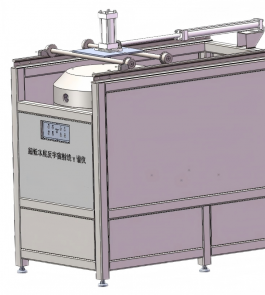
high-purity germanium (HPGe)γenergy spectrometer It is the most precise instrument in the field of spectral measurement, widely used in various radiometric measurement sites However, in the measurement of certain environmental samples, the radioactivity of the samples is low and requires the use of an anti cosmic ray anti Compton ray HPGe (High Purity Germanium) gamma energy spectrometer
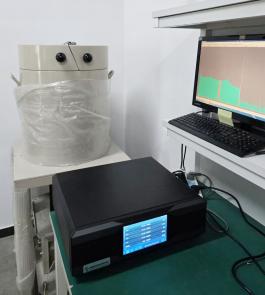
laboratory HPGe (High-Purity Germanium) γenergy spectrometer (high-purity germanium (HPGe)gamma spectrometer) It is an instrument used for low-level gamma radio activity spectral measurement, which can accurately and qualitatively measure the conducting/performing of samples containing gamma radio activity without loss
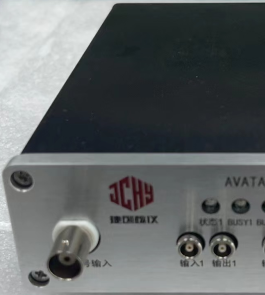
The AVATAR series dual channel Gaussian digital MCA spectrometer is based on a fully automated spectrometer system, which has been formed into a series of products. From the perspective of acquisition performance, it can be divided into basic performance and high count rate performance
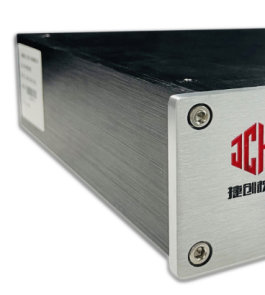
1) Introduction: Sipping MCA is a 100% domestically manufactured digital MCA system developed by Jiechuan Nuclear Instruments (Beijing) Technology Co., Ltd. It is an internally integrated digital MCA system that requires a signal polarity adjustment unit