

After theoretical verification, clinical exploration, and technological breakthroughs, BNCT has successfully achieved clinical translation and become a mature treatment option for refractory tumors. The clinical exploration of this technology began decades ago, and this article will outline its development trajectory to provide a clearer understanding of its history and value.
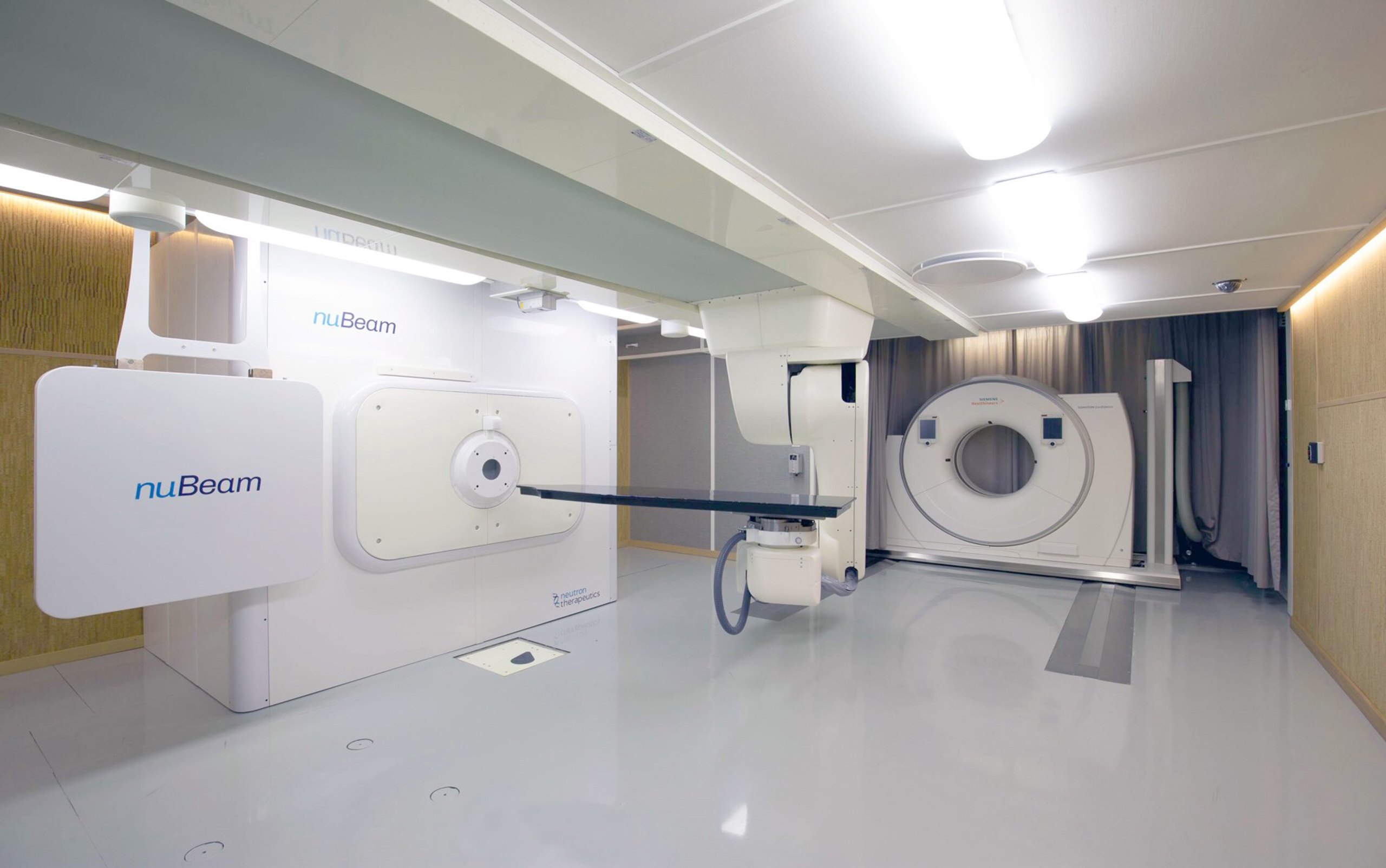
Theoretical Foundation Period (1930s-1940s): From Neutron Discovery to the Birth of Cancer Treatment Concepts
The birth of BNCT relies on breakthroughs in fundamental physicsIn 1932, Chadwick discovered neutrons, and in 1935, Taylor and Goldhaber described them; The key nuclear reaction of ⁰ B (n,α) ⁷ Li lays the core support for its technical principles.
In 1936, Locke first proposed the concept of neutron capture therapy for cancer, which became the starting point of BNCT technology. Its core logic‐ — The targeted aggregation of tumor cells by boron drugs and the precise killing of cancer by neutron irradiation are still ideal treatment directions to this day.
In 1940, Kruger published the first BNCT experimental results, which preliminarily verified the feasibility of the concept and established the concept of "BNCT"; Boron drug enrichment+neutron triggered reaction; The dual precision core framework.
Clinical exploration period (1950s-1980s): the world's first breakthrough in application and technological bottlenecks
The clinical exploration of BNCT started very early and officially began in the 1950s1951-1953Brookhaven National Laboratory in the United States utilized graphite research reactors for the first time in the treatment of malignant glioma patients, becomingThe world's first clinical application of BNCTThis marked the beginning of clinical exploration. During the same period, researchers found that the combination of boron compounds with amino acids can significantly increase the boron concentration in tumor tissues, laying a key foundation for subsequent precision treatment and proving its feasibility for human tumor treatment.
Although the first application verified feasibility, in the late 1950s, subsequent studies in the United States fell into a 30-year hiatus due to insufficient enrichment concentration of boron drugs in tumors, unsatisfactory therapeutic effects, and significant damage to normal tissues. However, the valuable human body data accumulated during this stage provides important references for overcoming technical bottlenecks in the future.
During the period of global research stagnation, Japan became a core driving forceIn 1968, Japanese scholar Hatanaka introduced sodium borate (BSH) to restart clinical exploration of BNCT; In 1987, Mishima's team used boron phenylalanine (BPA) to treat advanced malignant melanoma and optimized the treatment plan; In 1989, the Hatanaka team announced exciting results; — The 5-year survival rate of selected malignant glioma patients after treatment reached 58%, far exceeding traditional methods. This not only validates the effectiveness of the optimized plan, but also triggers a new global wave of BNCT research.
Clinical standardization and maturation stage (1990s present):Technological iteration empowers clinical breakthroughs
Since the 1990s, with the iteration of boron drugs and the innovation of neutron source technology, BNCT has entered a stage of standardized and large-scale development, and its technological maturity has continued to improve. During this period, research is no longer limited to small-scale exploration, but is advancing towards expanding indications, optimizing efficacy, and verifying safety, laying a solid foundation for clinical translation.
In terms of boron drugs, second-generation compounds such as L-BPA and BSH enhance tumor enrichment efficiency and selectivity, and low toxicity can achieve; Diagnosis+Treatment; coordination; The third-generation compounds are currently undergoing preclinical research, focusing on optimizing targeting and efficacy.
The innovation of neutron source technology provides key support for large-scale applications: early reliance on nuclear reactor equipment was large and costly, making it difficult to promote; After the 1990s, breakthroughs were made in the development of accelerator neutron sources. In 2008, Kyoto University andMitsubishi Heavy IndustriesThe jointly developed accelerator BNCT system was officially applied on a large scale in 2012, marking the entry of BNCT into the industry; Accelerator Era” Promote its widespread popularization.
2020 is an important milestone in the maturity of BNCT:After decades of research and accumulation, Japan has become the first country in the world to include BNCT in medical insurance, approving its use for the treatment of unresectable, locally advanced or locally recurrent head and neck cancer. The world's first BNCT device has been approved for market simultaneously with boron drugs. This achievement is supported by over a thousand clinical data cases accumulated globally, fully demonstrating its maturity and reliability. According to official summary data on clinical applications after its launch in Japan, BNCT was used in 154 patients with locally advanced or locally recurrent head and neck cancerThe objective remission rate is 70.1%, and the complete remission rate is 46.1%(Nearly half of the patients' tumors have completely regressed)! As of now, the marketed system has treated over 500 patients, and the relevant efficacy and safety data further validate the maturity of BNCT technology.
Development process of BNCT in China: keeping up with the global pace and accelerating clinical implementation
Although the development of BNCT in China started relatively late, relying on the collaborative innovation model between medical research and enterprises, it has achieved rapid progress from technology research and development to clinical exploration. The core equipment and boron drugs have gradually been localized, and multiple clinical trials have been carried out in an orderly manner. The overall process is closely following the global forefront, accelerating the clinical landing of technology and bringing new treatment hope to refractory tumor patients in China.
Among them, the cooperation project between Fenglin Nuclear Group and Shandong University Qilu Hospital is quite representative. The two parties jointly established a neutron medicine center in 2022, and the domestically developed boron neutron capture therapy system has passed the inspection of three types of medical devices and been included in the "Special Review Procedure for Innovative Medical Devices" of the National Medical Products Administration, achieving breakthroughs in boron drug research and development simultaneously.The Phase I clinical trial in 2025 has been approved by the National Medical Products Administration and the Clinical Trial Ethics Committee of Shandong University Qilu Hospital (Qingdao)The recruitment process for patients with recurrent or unresectable head and neck malignant tumors has officially begun.
Summary: Over the past 90 years, we have accumulated mature and reliable precision anti-cancer technologies
The maturity of BNCT is not accidental, but built on the profound accumulation of nearly 70 years of clinical exploration; — From the world's first application in 1951, to the efficacy verification of over 500 treatment cases in Japan, and to the continuous promotion of related research in China, the technical reliability has been fully confirmed by more than a thousand clinical data cases worldwide. Core“ Double precision; After multiple rounds of verification of logic, boron medicine and neutron source technology are constantly maturing. In addition to the approved head and neck cancer, the indications are also expanding to glioma, head and neck cancer, melanoma, breast cancer and other refractory tumors, becoming a globally recognized mature precise anti-cancer technology.

Scan the QR code above
Or search in WeChat“Jiechuang Nuclear Instruments” Follow Us
Stay Updated with Latest News
In today's increasingly widespread application of nuclear energy and technology, precise identification and quantitative analysis of radionuclei have become core requirements in fields such as environmental protection, nuclear safety regulation, medical diagnosis, and astrophysical research
VIEW DETAILSBoron Neutron Capture Therapy (BNCT) is a precision radiotherapy technique that uses boron drugs to target and enrich tumor cells, and triggers a neutron irradiation response to accurately kill cancer
VIEW DETAILSThe first isotope usage training course was established in Xi'an, Shaanxi in 1956, marking the birth of nuclear medicine in China. Since then, nuclear medicine has been integrated into clinical practice and serves patients nationwide
VIEW DETAILSBNCT construction projects in mainland China are classified into already operational, pre operational, under construction, and planned projects based on their operational status The pre operational projects in the table include projects that have already conducted or are planned to conduct clinical research
VIEW DETAILSNew standards for radiation protection regulations in nuclear power plants have been released, mainly introducing the content
VIEW DETAILSIndependently designed, developed, and built by our country fourth-generation advanced fission nuclear energy system - thorium-based molten salt experimental reactor, Recently, it was built in Wuwei and Gansu, and for the first time, thorium uranium conversion was achieved in the reactor
VIEW DETAILS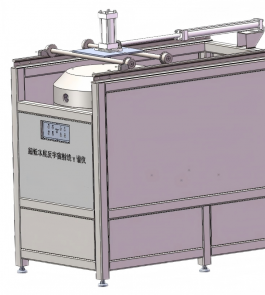
high-purity germanium (HPGe)γenergy spectrometer It is the most precise instrument in the field of spectral measurement, widely used in various radiometric measurement sites However, in the measurement of certain environmental samples, the radioactivity of the samples is low and requires the use of an anti cosmic ray anti Compton ray HPGe (High Purity Germanium) gamma energy spectrometer
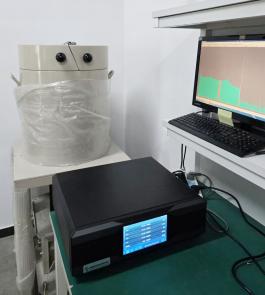
laboratory HPGe (High-Purity Germanium) γenergy spectrometer (high-purity germanium (HPGe)gamma spectrometer) It is an instrument used for low-level gamma radio activity spectral measurement, which can accurately and qualitatively measure the conducting/performing of samples containing gamma radio activity without loss
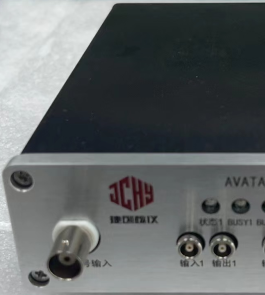
The AVATAR series dual channel Gaussian digital MCA spectrometer is based on a fully automated spectrometer system, which has been formed into a series of products. From the perspective of acquisition performance, it can be divided into basic performance and high count rate performance
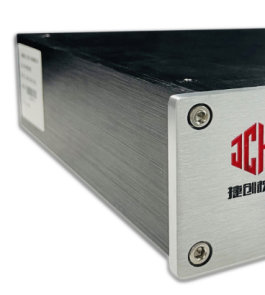
1) Introduction: Sipping MCA is a 100% domestically manufactured digital MCA system developed by Jiechuan Nuclear Instruments (Beijing) Technology Co., Ltd. It is an internally integrated digital MCA system that requires a signal polarity adjustment unit