

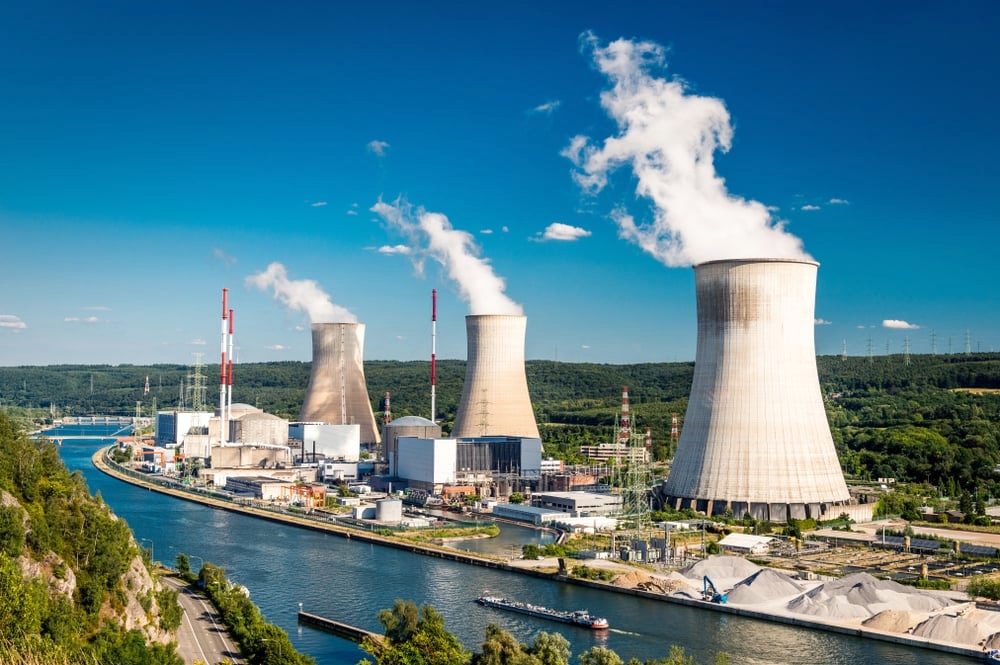
With the development of the digital economy, especially emerging industries such as artificial intelligence and data centers, the strategic value of nuclear energy is being reassessed. Currently, the international community's attention to nuclear energy has reached its peak since the oil crisis in the 1970s. As of the end of 2024, there are 421 nuclear power units in operation worldwide, with a total installed capacity of approximately 379 million kilowatts, setting a new high in nearly a decade。According to the statistics of the International Atomic Energy Agency (IAEA) on the proportion of nuclear power generation in the total electricity generation of various countries in 2024, there are 21 countries with nuclear power accounting for more than 10%, 13 countries with nuclear power accounting for more than 25%, and 2 countries with nuclear power accounting for more than 50%。
2、The nuclear energy industry is showing an accelerated recovery trend globally
Mainly reflected in: firstly, important international multilateral conferences and organizations have raised their expectations for the scale of nuclear energy development. The "Triple Nuclear Declaration" signed by multiple countries at the 28th United Nations Climate Change Summit in 2023 aims to triple the global nuclear energy installed capacity by 2050 to that of 2020, with an estimated breakthrough of 1.1 billion kilowatts。
Secondly, traditional nuclear powers have clearly defined their plans for nuclear energy revival. In May 2025, US President Trump signed four executive orders related to nuclear energy, including expanding the scale of US nuclear energy, strengthening the nuclear energy industry chain, and shortening the approval cycle for nuclear power projects. The long-term plan is to add 200 million kilowatts of nuclear power installed capacity by 2050, and triple the total installed capacity of nuclear power to the current level; The mid-term goal is to achieve an additional 35 million kilowatts of under construction or operational installed capacity by 2035。
Russia plans to put 12 new nuclear power units into operation by 2035 and build 29 nuclear power units by 2045, with nuclear energy accounting for 25% of its energy structure. The UK proposes to double the nuclear power capacity and expand the proportion of nuclear energy to 25% by 2050. The French government has extended the lifespan of reactors and developed a new generation of nuclear reactor technology, announcing the construction of 6 to 14 new reactors. India promises to invest $245 million in nuclear power projects by 2025, with an expected installed capacity of 100 gigawatts by 2047Germany, on the other hand, has abandoned its strong anti nuclear stance. According to the latest May 2025 poll, 55% of German citizens support the restoration of nuclear power, an increase of 23 percentage points from three years ago. The new German government has also stated that it will no longer obstruct the EU's nuclear energy development policy.
Third, many emerging countries actively embrace nuclear energy. More than 30 countries, including Poland, Armenia, Türkiye, Saudi Arabia, Brazil and Argentina, have proposed new nuclear power construction plans, and about 20 developing countries are still in the active planning or exploration stage.
3Asia is the region with the strongest growth in nuclear power globally
Due to differences in policies, economy, technological development level, and social acceptance, the global growth of nuclear power shows a significant imbalance. It is predicted that Asia will be the region with the strongest growth in global nuclear power, especially China and India. China has a total of 102 nuclear power units in operation, under construction, and approved for construction, with an installed capacity of 113 million kilowatts. The overall scale of nuclear power has jumped to the world's first place for the first time. There are a total of 28 nuclear power units under construction, with a total installed capacity of 33.65 million kilowatts. The installed capacity of under construction units has remained the world's largest for 18 consecutive years. According to the current construction speed and pace, China's nuclear power installed capacity will reach 200 million kilowatts by 2040, accounting for about 10% of the total power generation。
Overall, with the gradual maturity of nuclear power technology and the improvement of safety assurance capabilities, the construction of nuclear power worldwide is accelerating, which is the result of multiple factors such as decarbonization and maintaining energy security. Affected by nuclear safety, energy policies, climate goals, and economic conditions, countries around the world have different attitudes towards the development of nuclear energy. Most countries hold a positive attitude towards the development and application of civil nuclear energy, such as the United States, Russia, France, the United Kingdom, China, Canada, South Korea, India, Poland, etc., and will continue to develop nuclear energy and make it an important component of the energy structure; Some countries, such as Germany, Italy, Spain, Belgium, Switzerland, etc., have gradually shifted their opposition to nuclear energy; There are also some countries that hold a negative attitude towards nuclear energy, such as Austria, New Zealand, Luxembourg, etc., which do not involve nuclear energy or have plans to gradually phase out nuclear energy in the coming years.
Jiechuang Nuclear Instrument (Beijing) Technology Co., Ltd. has always taken the localization of nuclear electronics technology as its first goal. Through continuous technological accumulation, it has developed a series of core components and products for nuclear electronics. On this basis, representative laboratory nuclear instruments (high-purity germaniumγ) have been successively launched in recent years; Spectrometer, alpha; Spectrometer, screen ionization chamber, flow gas low background alpha; /β Measuring instruments and portable instruments (portable lanthanum bromide spectrometer, wound contamination detector, water and food radioactivity detector), etc.

Scan the QR code above
Or search in WeChat“Jiechuang Nuclear Instruments” Follow Us
Stay Updated with Latest News
In today's increasingly widespread application of nuclear energy and technology, precise identification and quantitative analysis of radionuclei have become core requirements in fields such as environmental protection, nuclear safety regulation, medical diagnosis, and astrophysical research
VIEW DETAILSBoron Neutron Capture Therapy (BNCT) is a precision radiotherapy technique that uses boron drugs to target and enrich tumor cells, and triggers a neutron irradiation response to accurately kill cancer
VIEW DETAILSThe first isotope usage training course was established in Xi'an, Shaanxi in 1956, marking the birth of nuclear medicine in China. Since then, nuclear medicine has been integrated into clinical practice and serves patients nationwide
VIEW DETAILSBNCT construction projects in mainland China are classified into already operational, pre operational, under construction, and planned projects based on their operational status The pre operational projects in the table include projects that have already conducted or are planned to conduct clinical research
VIEW DETAILSNew standards for radiation protection regulations in nuclear power plants have been released, mainly introducing the content
VIEW DETAILSIndependently designed, developed, and built by our country fourth-generation advanced fission nuclear energy system - thorium-based molten salt experimental reactor, Recently, it was built in Wuwei and Gansu, and for the first time, thorium uranium conversion was achieved in the reactor
VIEW DETAILS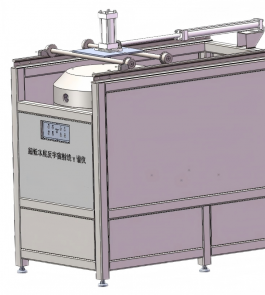
high-purity germanium (HPGe)γenergy spectrometer It is the most precise instrument in the field of spectral measurement, widely used in various radiometric measurement sites However, in the measurement of certain environmental samples, the radioactivity of the samples is low and requires the use of an anti cosmic ray anti Compton ray HPGe (High Purity Germanium) gamma energy spectrometer
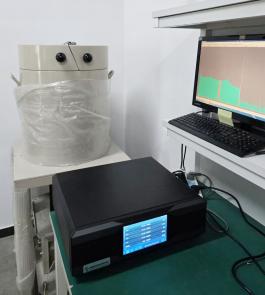
laboratory HPGe (High-Purity Germanium) γenergy spectrometer (high-purity germanium (HPGe)gamma spectrometer) It is an instrument used for low-level gamma radio activity spectral measurement, which can accurately and qualitatively measure the conducting/performing of samples containing gamma radio activity without loss
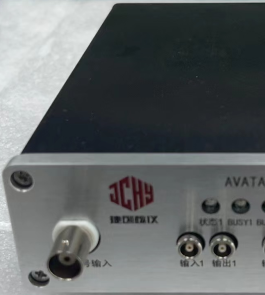
The AVATAR series dual channel Gaussian digital MCA spectrometer is based on a fully automated spectrometer system, which has been formed into a series of products. From the perspective of acquisition performance, it can be divided into basic performance and high count rate performance
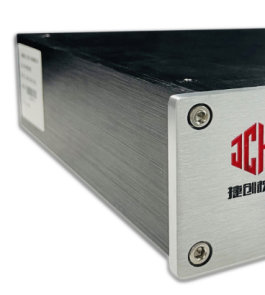
1) Introduction: Sipping MCA is a 100% domestically manufactured digital MCA system developed by Jiechuan Nuclear Instruments (Beijing) Technology Co., Ltd. It is an internally integrated digital MCA system that requires a signal polarity adjustment unit