

The Nuclear Safety Center and the Russian Center for Nuclear and Radiation Safety Science and Engineering signed their first cooperation agreement and held technical exchanges
On October 17, 2023, the Nuclear and Radiation Safety Center of the Ministry of Ecology and Environment (hereinafter referred to as the Nuclear Safety Center) and the Russian Nuclear and Radiation Safety Science and Engineering Center held a technical exchange meeting at the National Nuclear and Radiation Safety Supervision Technology Research and Development Base. The main person in charge of the Nuclear Safety Center and the director of the Russian Nuclear and Radiation Safety Science and Engineering Center jointly attended the meeting and signed a cooperation agreement between the two countries' nuclear safety regulatory technical support agencies. The International Cooperation Department of the Ministry of Ecology and Environment (National Nuclear Safety Administration) was invited to send representatives to attend the conference.
At the meeting, the Russian side introduced its progress in the research and development of small reactors, floating reactors, nuclear icebreakers, pulse reactors, new research reactors, innovative nuclear devices, and safety regulatory standards. Technical personnel from the Nuclear Safety Center and representatives from the Russian side had a special exchange on technical issues such as the VVER-1200 nuclear power project, small reactors, emergency preparedness and response, nuclear fuel cycle facilities, radioactive waste management, retirement, aging management, spent fuel management, deep disposal of radioactive waste, and development of safety verification software.
The Nuclear Safety Center stated that,This meeting coincides with the third edition“The Belt and Road Initiative”The International Cooperation Summit Forum was held in Beijing,President Xi and President Putin will jointly attend this“The Belt and Road Initiative”initiative10Anniversary commemorative activities,And hold consultations on the roles played by China and Russia on the international stage, as well as their cooperation。In the process of comprehensive pragmatic cooperation between China and Russia,The cooperation between the two countries in nuclear safety supervision has also achieved rich results:IntroducingVVER-1000During nuclear power projects,The nuclear safety regulatory agencies of the two countries establish a regular personnel exchange mechanism,China invites Russian supervisors to conduct joint supervision at the Chinese site. During VVER-1200In project cooperation,Thoroughly implement President Xi“To achieve high quality、High standard construction and good operation4Taiwan unit,Build a global benchmark in the field of nuclear safety”Important instructions,Establish a cooperation mechanism to regularly carry out construction、Feedback and exchange of experience in operation and debugging。by means ofVVERCollaboration on a series of nuclear power cooperation projects,The two countries not only enhance mutual trust and understanding,More guaranteedVVEROperation safety and construction quality of series nuclear power projects。
The Russian side stated that the convening of this technical exchange meeting will further expand the scope of regulatory technology cooperation between China and Russia, lay a solid foundation for consolidating bilateral cooperation, promoting future cooperation, and jointly addressing nuclear safety challenges. We hope to further strengthen our cooperation in technology research and development with the Nuclear Safety Center, and work together to provide strong scientific and technological support for nuclear safety regulatory agencies and the nuclear industry.
The International Department stated that the nuclear safety regulatory agencies of China and Russia have actively and effectively carried out practical cooperation through bilateral joint coordination meetings (at the deputy ministerial level) and thematic seminar mechanisms, the nuclear sub committee mechanism of the China Russia Prime Ministers' Regular Meeting Committee, and the multi country design evaluation plan mechanism of the OECD Nuclear Energy Agency. The cooperation is diverse in form, rich in content, and has achieved significant results. The signing of the cooperation agreement between the two countries' nuclear safety regulatory technical support agencies will further promote technical exchanges and cooperation between the two sides, including regulatory technology research and development cooperation.
The conference will last for 2 days, and a delegation from the Russian Center for Nuclear and Radiation Safety Science and Engineering will visit the experimental facilities of the National Nuclear and Radiation Safety Supervision Technology Research and Development Base and the Xudabao Nuclear Power Plant after the conference.

Scan the QR code above
Or search in WeChat“Jiechuang Nuclear Instruments” Follow Us
Stay Updated with Latest News
In today's increasingly widespread application of nuclear energy and technology, precise identification and quantitative analysis of radionuclei have become core requirements in fields such as environmental protection, nuclear safety regulation, medical diagnosis, and astrophysical research
VIEW DETAILSBoron Neutron Capture Therapy (BNCT) is a precision radiotherapy technique that uses boron drugs to target and enrich tumor cells, and triggers a neutron irradiation response to accurately kill cancer
VIEW DETAILSThe first isotope usage training course was established in Xi'an, Shaanxi in 1956, marking the birth of nuclear medicine in China. Since then, nuclear medicine has been integrated into clinical practice and serves patients nationwide
VIEW DETAILSBNCT construction projects in mainland China are classified into already operational, pre operational, under construction, and planned projects based on their operational status The pre operational projects in the table include projects that have already conducted or are planned to conduct clinical research
VIEW DETAILSNew standards for radiation protection regulations in nuclear power plants have been released, mainly introducing the content
VIEW DETAILSIndependently designed, developed, and built by our country fourth-generation advanced fission nuclear energy system - thorium-based molten salt experimental reactor, Recently, it was built in Wuwei and Gansu, and for the first time, thorium uranium conversion was achieved in the reactor
VIEW DETAILS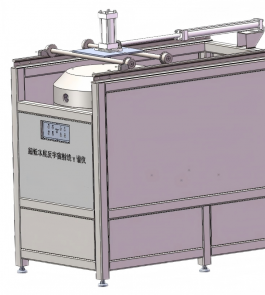
high-purity germanium (HPGe)γenergy spectrometer It is the most precise instrument in the field of spectral measurement, widely used in various radiometric measurement sites However, in the measurement of certain environmental samples, the radioactivity of the samples is low and requires the use of an anti cosmic ray anti Compton ray HPGe (High Purity Germanium) gamma energy spectrometer
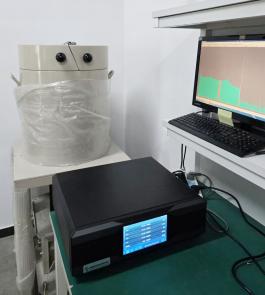
laboratory HPGe (High-Purity Germanium) γenergy spectrometer (high-purity germanium (HPGe)gamma spectrometer) It is an instrument used for low-level gamma radio activity spectral measurement, which can accurately and qualitatively measure the conducting/performing of samples containing gamma radio activity without loss
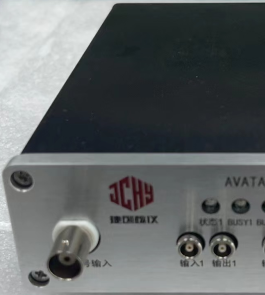
The AVATAR series dual channel Gaussian digital MCA spectrometer is based on a fully automated spectrometer system, which has been formed into a series of products. From the perspective of acquisition performance, it can be divided into basic performance and high count rate performance

1) Introduction: Sipping MCA is a 100% domestically manufactured digital MCA system developed by Jiechuan Nuclear Instruments (Beijing) Technology Co., Ltd. It is an internally integrated digital MCA system that requires a signal polarity adjustment unit